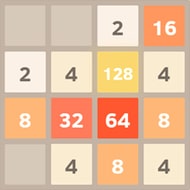
2048 is a puzzle game built on a simple idea: slide numbered tiles on a grid and combine matching values to create larger numbers. Despite its minimal controls, the experience quickly turns into a deep strategy challenge where every move shapes the future of the board. Success depends on patience, spatial awareness, and the ability to predict how tiles will appear and interact after each action. As the grid fills, decisions become more critical, and even a single mistake can limit all future possibilities.
Tile Movement and Chain Reactions
The core gameplay of 2048 revolves around shifting tiles in four directions. Each move causes all tiles to slide simultaneously, often creating chain reactions where multiple merges happen in a single turn. Understanding how these reactions form is essential for building high-value tiles efficiently.
- All tiles move together with every swipe
- Matching numbers merge into a higher value tile
- New tiles appear after each move, increasing board pressure
- Chain merges can dramatically change board structure
Players quickly learn that random moves are not effective. Instead, controlled movement and careful planning are needed to avoid blocking key merging paths. The more structured the board remains, the easier it is to create high-number combinations.
Board Strategy and Space Management
In 2048, managing empty space is just as important as merging tiles. The board becomes more difficult to control as it fills, so keeping open areas is essential for long-term survival. Skilled players develop patterns that help them maintain order while still allowing flexibility for new tiles.
- Keep movement patterns consistent to avoid chaos
- Preserve empty spaces for future tile spawns
- Build merges around a structured layout
- Avoid scattering high-value tiles across the board
A common technique in 2048 is to organize tiles in a gradient, where the highest values stay in one area while smaller numbers feed into them. This reduces randomness and helps maintain control even when the board becomes crowded.
Advanced Planning and Decision Making
As the difficulty increases, 2048 becomes a game of prediction rather than reaction. Players must think several moves ahead, considering not only immediate merges but also how new tiles will affect future options. Poor planning often leads to blocked paths and unavoidable failures.
- Think multiple moves ahead before making a swipe
- Prioritize maintaining merge opportunities over quick gains
- Avoid moves that break established tile structure
- Balance short-term merges with long-term board control
Many players struggle because they focus only on combining tiles as soon as possible. However, advanced strategies require restraint—sometimes it is better to delay a merge if it preserves better positioning for future moves.
Why 2048 Remains a Timeless Puzzle
The lasting appeal of 2048 comes from its balance of simplicity and depth. Each session creates a unique board state, meaning no two attempts play out the same way. Small decisions accumulate into large consequences, and success depends entirely on the player’s ability to stay organized under pressure.
2048 continues to attract players who enjoy logical thinking and gradual improvement. It rewards careful planning, pattern recognition, and disciplined play. Whether aiming for higher scores or simply trying to last longer, every run teaches something new about strategy and control.