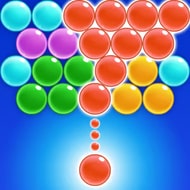
Blob Drop offers a logic-focused experience built around physics-based placement and timing. Each level challenges players to predict how blobs will interact with their environment, turning simple mechanics into increasingly complex puzzles.
Blob Physics and Interaction Rules
The main mechanic in Blob Drop involves releasing blobs that respond to gravity, surface properties, and collisions. Small changes in timing can dramatically alter outcomes, making precision and observation essential.
- Gravity response: Controls fall behavior.
- Surface interaction: Blobs may bounce or stick.
- Collision effects: Influence final placement.
Mastering these interactions reduces reliance on trial and error.
Level Design and Difficulty Scaling
Blob Drop introduces new elements gradually, ensuring that each challenge builds on previous knowledge. Early levels focus on basic placement, while later stages require anticipating chain reactions and multi-blob interactions.
- Static obstacle layouts
- Moving platforms and timing challenges
- Sequential blob dependencies
Effective Problem-Solving Approaches
Success in Blob Drop depends more on analysis than speed. Players often wonder if guessing is unavoidable, but most solutions emerge by studying platform movement and predicting blob behavior.
- Observe environmental patterns
- Plan release order
- Fine-tune timing adjustments
Replay Value and Player Exploration
Some levels in Blob Drop allow multiple valid solutions, encouraging replay and experimentation. This flexibility keeps challenges engaging even after completion.
Blob Drop emphasizes clarity, logic, and consistent mechanics. Its compact puzzles and predictable rules reward thoughtful decision-making and careful planning throughout progression.