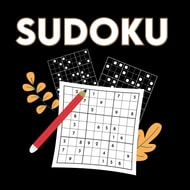
Sudoku transcends being a mere pastime; it is a rigorous exercise in pure logic, demanding that players engage in deduction, intense concentration, and meticulous pattern recognition. The core goal is to populate the grid so that each row, column, and designated block contains every required digit exactly once. While its principles are elegantly simple, every puzzle is a unique labyrinth of logic, challenging the solver’s focus and systematic reasoning. This pursuit cultivates strategic patience, rewarding those who can visualize hidden patterns and foresee the implications of their placements several steps into the future.
Core rules and logical structure of the puzzle
The elegance of Sudoku is rooted in its immutable structural laws. Every vacant square must be assigned a number that is absent from its associated row, column, and 3×3 subgrid. Each puzzle is engineered with a single, mathematically valid solution, rendering guesswork futile. Progress is achieved solely through logical elimination, methodically discarding impossibilities until the correct number is incontrovertibly revealed. This unwavering reliance on reason transforms every completed grid into a personally earned intellectual victory.
Difficulty levels and increasing logical complexity
The Sudoku universe spans a vast spectrum of challenge, from gently guiding introductory grids to mind-bending expert constructs. Simpler puzzles offer abundant clues and direct deductions, whereas advanced configurations necessitate sophisticated, multi-layered analysis. To conquer higher difficulties, solvers must deploy advanced tactics like pinpointing hidden pairs or triples, applying “what-if” scenario testing, and cross-referencing candidate numbers across interconnected grid regions.
- Rows and columns: Each must contain all required numbers once.
- Subgrids: Smaller sections that follow the same rule set.
- Given numbers: Fixed values that guide logical deduction.
- Empty cells: Spaces that must be solved using reasoning.
Effective strategies for solving challenging grids
- Scan consistently: Check rows, columns, and subgrids together.
- Use elimination: Remove impossible numbers from consideration.
- Look for patterns: Repeating structures often reveal solutions.
- Work step by step: Small progress leads to full completion.
- Stay patient: Rushing increases the chance of mistakes.
Benefits of regular Sudoku puzzle solving
Sudoku delivers profound cognitive benefits alongside its engaging gameplay. Consistent practice sharpens concentration, enhances short-term memory, and refines analytical problem-solving abilities. The puzzle promotes a state of meditative focus and disciplined thought, serving as both a mental workout and a therapeutic respite. Each successfully solved grid imparts a tangible sense of mental clarity and accomplishment, thereby strengthening one’s confidence in logical decision-making.
Why Sudoku remains endlessly appealing
Sudoku’s enduring global appeal stems from its masterful fusion of accessible rules and boundless depth. The fundamentals can be grasped in minutes, yet true mastery presents a lifelong journey of logical refinement. With an infinite array of puzzles across continuously evolving difficulty tiers, Sudoku perpetually captivates minds that relish structured challenges. Its clean, number-based language, unambiguous objective, and deeply satisfying “aha!” moments cement its status as the quintessential puzzle for seekers of thoughtful, rewarding mental engagement.